
Rug care & advice
How to Remove Mud from a Rug Safely | Expert Advice
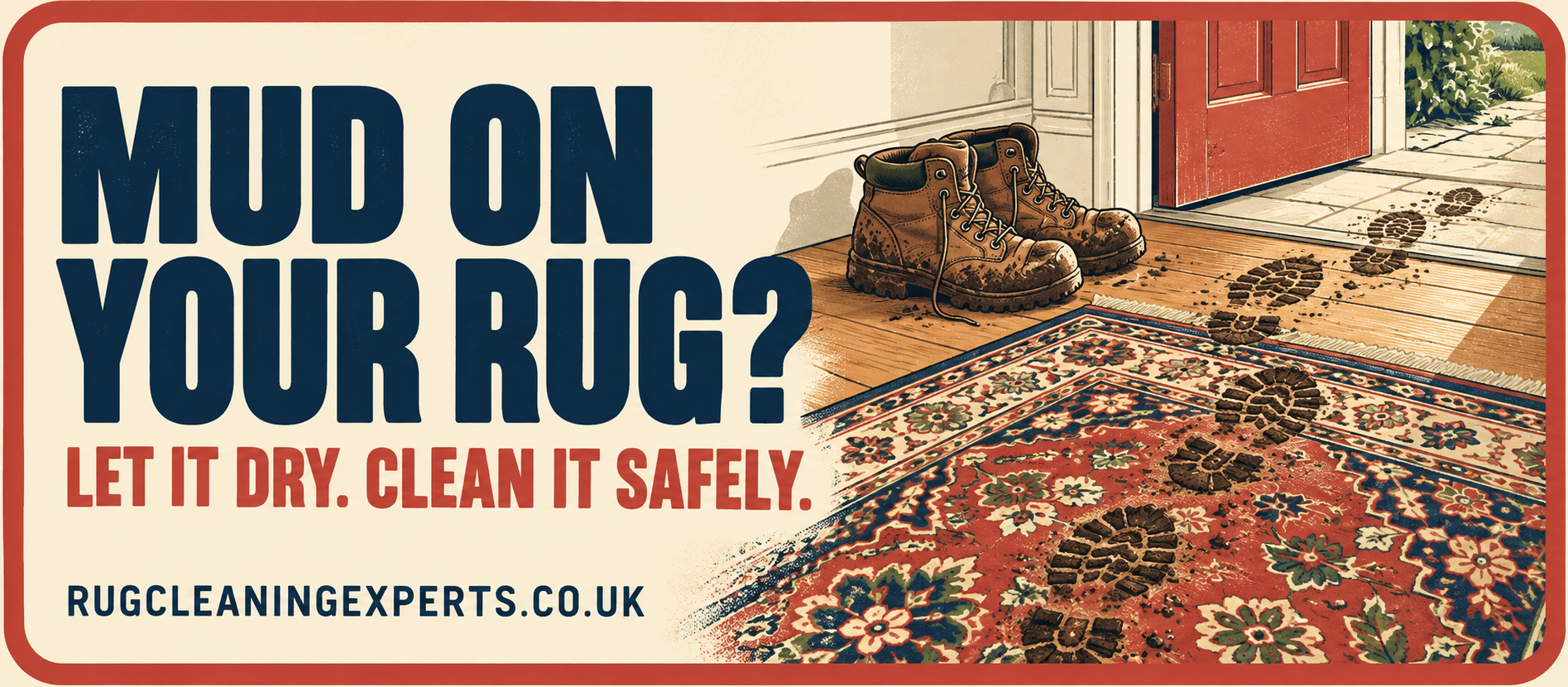
Muddy footprints on your rug? Unlike many spills, mud is often easier to remove after it has dried. Rubbing or washing wet mud can spread it further and force soil deeper into the rug’s fibres. Follow our expert advice to remove mud safely while protecting the rug’s colour, pile and foundation.
Quick answer
Allow ordinary mud to dry completely before attempting to remove it. Once dry, carefully loosen the surface soil and vacuum it using gentle suction. Do not scrub wet mud, pour water onto the rug or use strong household cleaning products. If staining remains, or the rug is wool, silk, viscose, Persian or handmade, seek professional advice. If the mud may contain sewage, chemicals, oil or animal waste, avoid handling it and arrange specialist cleaning.
What to do: step by step
Mud contains fine soil, grit, organic material and sometimes oils or other contaminants. When wet, these particles can spread through the pile and penetrate the rug’s foundation.
-
Identify the Source
Consider where the mud came from. Ordinary garden soil presents a different risk from mud containing road oil, animal waste, sewage or contaminated floodwater. If contamination is possible, wear gloves, keep children and pets away, and contact a professional rug cleaner.
-
Allow Ordinary Mud to Dry
For ordinary soil or garden mud, leave the affected area undisturbed until it has dried completely. Trying to remove wet mud can spread it across the rug and push it further into the fibres.
-
Remove Loose Surface Soil
Once dry, carefully loosen any thick pieces using a spoon, blunt plastic scraper or the edge of a plastic card. Avoid pulling or scraping aggressively, particularly on looped, tufted or delicate rugs.
-
Vacuum Carefully
Use a vacuum cleaner with gentle suction to collect loose, dry soil. Avoid rotating brush heads on fringes, handmade rugs and delicate fibres. Vacuum slowly without pressing the attachment heavily against the rug.
-
Work from the Outside Inwards
If a visible mark remains, begin at the outside edge and gradually work towards the centre. This reduces the chance of spreading the affected area.
-
Blot—Never Scrub
For a robust, colourfast synthetic rug, lightly dampen a clean white cloth with cool water and gently blot the remaining mark. Do not pour water directly onto the rug. Use as little moisture as possible and stop immediately if colour transfers onto the cloth.
-
Absorb Remaining Moisture
Place a clean, dry white towel over the treated area and apply gentle pressure. Allow safe airflow around the rug. Do not use a hairdryer, radiator or other strong heat source.
-
Arrange Professional Cleaning
Contact a rug-cleaning specialist if: - A brown or grey stain remains - Mud has penetrated through the rug - The affected area has an unpleasant smell - The mud contained oil or other contaminants - Colours transfer onto your cleaning cloth - The rug is valuable, handmade or delicate - The rug has become heavily saturated
What not to do
Do Not Scrub Wet Mud
Scrubbing can spread wet soil, distort the pile and push grit deeper into the rug.
Do Not Pour Water onto the Rug
Excess water may spread the contamination and cause dye movement, shrinkage, browning or damage to the rug’s foundation.
Do Not Use Hot Water
Heat may affect natural fibres and unstable dyes. It can also make oily road dirt more difficult to treat correctly.
Do Not Use Washing-Up Liquid
Washing-up liquid can leave a sticky residue that attracts fresh dirt and may be difficult to rinse from the rug.
Do Not Use Bleach
Bleach can remove colour, weaken fibres and cause irreversible damage.
Do Not Use a Stiff Brush
Hard brushing can fray fibres, distort the pile and create a permanently lighter or rougher-looking area.
Do Not Use a Steam Cleaner
Steam introduces heat and moisture and may drive fine soil deeper into the rug’s construction.
Do Not Vacuum Wet Mud
Moisture can damage a standard vacuum cleaner and spread wet contamination through the machine.
A note on different rug types
Wool
Wool can hold large quantities of fine soil and moisture. Avoid overwetting, vigorous brushing and strong chemicals. Mud may remain deep within the pile even after the surface looks clean.
Persian & Oriental
Persian and Oriental rugs may contain delicate natural fibres and dyes. Allow ordinary mud to dry, remove only loose surface soil and seek specialist advice before applying water or cleaning products.
Silk
Silk is highly sensitive to moisture, friction and chemicals. Do not brush, scrub or attempt extensive home cleaning. Professional assessment is recommended.
Viscose
Viscose becomes weaker when wet and can suffer permanent texture changes, water marks and discolouration. Avoid adding moisture and contact a rug-cleaning specialist.
Synthetic
A colourfast synthetic rug may tolerate careful blotting with a very small amount of cool water after the dried soil has been removed. The rug’s backing and construction can still be damaged by oversaturation.
Jute and Sisal
Plant-based fibres can develop browning, shrinkage and permanent water marks. Keep these rugs as dry as possible and seek specialist advice before attempting wet cleaning.
Frequently asked questions
Should I Let Mud Dry Before Cleaning It?
Yes—provided it is ordinary, uncontaminated mud. Once dry, much of the soil can be carefully loosened and vacuumed without being spread further through the rug.
What If the Mud Contains Sewage or Animal Waste?
Do not treat it like ordinary garden mud. Wear gloves, keep people and pets away, and seek professional advice because specialist cleaning and decontamination may be required.
Can I Use a Carpet-Cleaning Machine?
Domestic carpet-cleaning machines can oversaturate rugs without thoroughly rinsing or extracting the soil. This may cause browning, shrinkage, dye movement and unpleasant odours.
Why Is There Still a Brown Mark After Vacuuming?
Fine soil, minerals or organic material may remain attached to the fibres after loose dirt has been removed. The rug may require controlled rinsing and professional cleaning.
Can Mud Permanently Stain a Rug?
Yes. Clay-rich soil, road dirt, oils and other contaminants can leave persistent stains. The result depends on the rug’s fibres, colours, construction and how long the mud remained in place.
Can I Brush Dried Mud Away?
A very soft brush may help loosen surface soil on some robust rugs, but aggressive brushing can damage the pile. Avoid brushes on silk, viscose, handmade rugs and fringes.
Should I Clean the Floor Underneath?
Yes. Check beneath the rug for transferred moisture and soil. The floor should be cleaned using a method suitable for its particular surface.
Can Old Mud Stains Be Removed?
Many older muddy marks can be significantly improved through professional cleaning. However, permanent discolouration may remain if the contamination contained oil, chemicals or strong natural pigments.
How Long Does Professional Rug Cleaning Take?
We collect your rug, clean it at our specialist rug-cleaning facility and return it following controlled drying and final inspection. Our typical turnaround time is approximately 14 days.
What Our Customers Say
Don’t just take our word for it: hear from our satisfied customers
“Great service all around from initial contact to return of a lovely renewed rug !”
“Used them on several occasions rugs come home clean and smells lovely I would recommend them”
“Great communication, very happy with price, friendly pick up and delivery and most important really happy with clean and scotch-guard. many thanks.”
“Excellent service have had my rugs cleaned a few times would defo recommend”
“Excellent pickup and delivery service and first class clean, thanks guys”
“Excellent service and a fast turnaround from pickup to delivery, highly recommend this company 👍🏻👍🏻”
Need help with mud on your rug?
Our specialist team cleans wool, Persian, Oriental, synthetic and delicate rugs. Free collection and return, with a typical turnaround of approximately 14 days.
